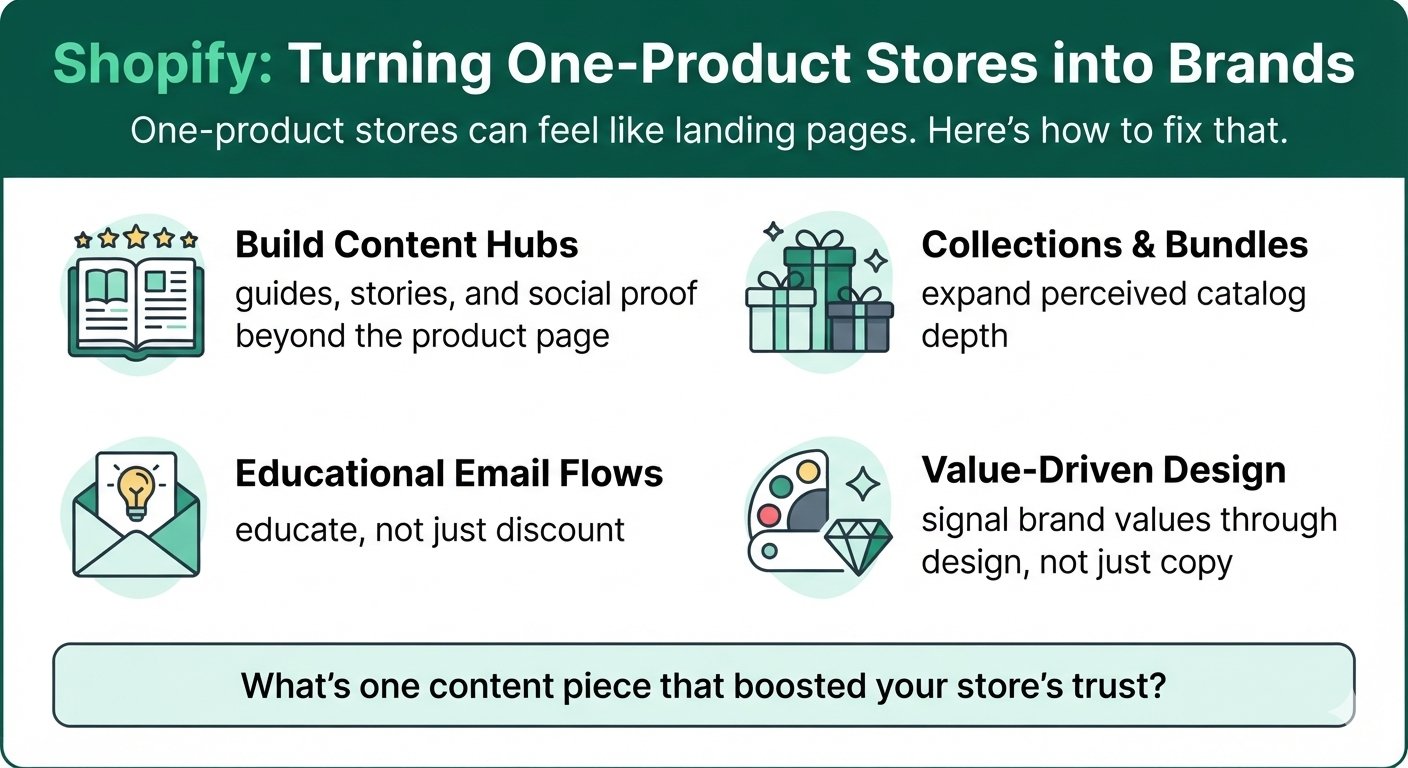
Launching a Shopify store around a single hero product is one of the fastest ways to validate an idea and get to market. The focus is sharp, inventory is manageable, and ad creative is easy to test.
The challenge comes after initial traction. Without a deep product catalog to browse, many one-product stores end up looking and feeling like glorified landing pages—transactional, thin, and overly reliant on aggressive discounts to convert visitors.
Shoppers today buy into brands they trust, not just isolated product pages. Moving from a single-SKU funnel to a recognizable, enduring brand doesn’t require launching dozens of new products overnight. It comes down to how you structure your content, merchandising, lifecycle marketing, and visual identity.
1. Build Content Hubs Beyond the Product Page
When your entire store revolves around one Product Detail Page (PDP), visitors have nowhere else to go if they aren’t ready to buy immediately. Either they convert on the spot, or they bounce.
Creating dedicated content hubs gives hesitant shoppers reasons to stay, explore, and build confidence in your expertise:
- Buying and Comparison Guides: Help visitors understand how your product solves their problem compared to traditional alternatives.
- Origin and Craft Stories: Share why you created the product, how materials are sourced, or the engineering behind how it works.
- Deep Social Proof: Move beyond a basic star-rating widget. Dedicate pages or sections to detailed customer case studies, video testimonials, and real-world use cases.
2. Expand Perceived Catalog Depth with Collections and Bundles
A single core product doesn’t mean your navigation menu has to feel empty. Strategic merchandising allows you to create a fuller shopping experience while naturally increasing Average Order Value (AOV).
- Curated Collections: Organize your storefront by use case, lifestyle, or customer goal rather than just product type. Even if multiple collections feature variations or kits centered around your hero item, it frames the product around the customer’s specific needs.
- Thoughtful Bundles: Pair your flagship item with complementary accessories, refills, or multi-pack tiers (such as a “Starter Kit,” “Complete Set,” or “Gift Bundle”). Bundles give customers clear choices and make your store feel like an established ecosystem rather than a one-off offer.
3. Leverage Email Flows to Educate, Not Just Discount
Many one-product stores lean heavily on pop-ups offering 10% or 15% off, followed by automated emails repeating the same coupon code. While discounts can trigger quick impulse buys, relying on them trains customers to wait for sales and erodes brand value.
Shift your automated email flows—especially your Welcome Series and Post-Purchase sequences—toward education and connection:
- Pre-Purchase Education: Break down key product benefits one by one, address common objections, share founder insights, and highlight customer stories before pushing hard for the sale.
- Post-Purchase Onboarding: Teach new buyers how to get the best results from your product. Helpful setup tips, care instructions, and creative ways to use what they just bought reduce buyer’s remorse and drive repeat word-of-mouth referrals.
4. Signal Brand Values Through Design, Not Just Copy
Anyone can write “premium quality” or “thoughtfully made” in a headline, but shoppers judge credibility in milliseconds based on visual cues. When you only have one product to showcase, your design system carries even more weight.
- Cohesive Visual Language: Invest in consistent typography, a deliberate color palette, and high-craft product photography that shows your item in real, aspirational contexts—not just on a plain white background.
- Intentional UX and Packaging: Every touchpoint—from custom icons and clean page spacing to the unboxing experience—communicates whether your business is a temporary drop-ship funnel or a brand built to last.
Great brands aren’t defined by how many SKUs sit in their warehouse. By pairing a focused product with rich storytelling, smart bundling, educational email journeys, and elevated design, a one-product Shopify store can earn the same authority and customer loyalty as a full-catalog flagship.